Feeds:
Posts
Comments

I’ve been in eighteenth century Northumberland visiting all the families in the Coquet River valley! Time travel courtesy of the handwritten Allenton (Alwinton) parish registers. They were so interesting I read through the lot. It took a few days on the microfilm readers at HAGSOC (my local genealogical society). You can see the recurring combination of family names and farm names, recognise each separate family and farm despite name and spelling variations and enjoy (as tis said), ye arcane terminology, appreciate the Minister who adds little extra details to the record, feel sad as his writing becomes shaky and the next burial is his own.

I’m afraid the Bygate Hall myth is totally blown. Jack Forster was apparently a bit of an old romantic! The Forsters never owned Bygate (or Byegate) Hall! From the parish registers it is obvious that numerous families lived at Bye-Gate-Hall at any given time. Also, going by this quote from a contemporary account (citation below*), it usually had absentee landlords:

Bygate Hall, Makendon, Loungesknow, and Sirdhope, all fine sheep-lands, were sold in 1792 for £16,000 by the late Matthew Bell, Esq. of Wolsington, to the late John Carr, Esq. of Dunston, in the county of Durham.

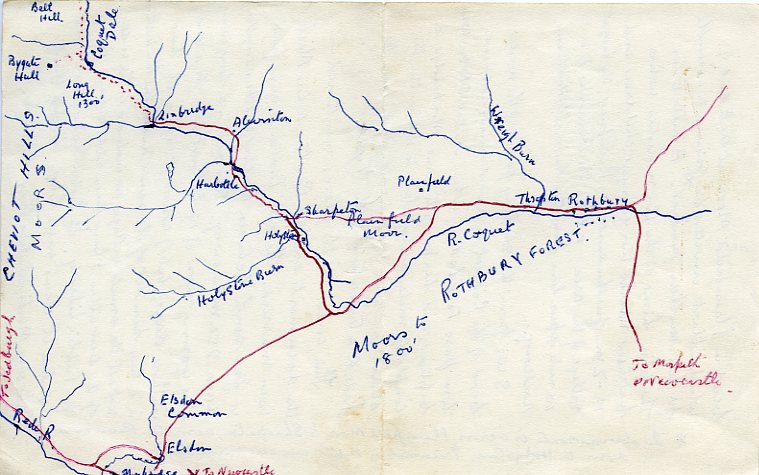
Jack’s map helps you work out what’s where in the valley:

https://taggerty.net/wp-content/uploads/2011/05/map-of-r-coquet-with-bygate-hall-from-jack-f-1962.jpg

Anyway, Back to the parish register. No Forsters at all are mentioned in it until 1727 when one or two marry into the district, including William Forster of Rothbury Parish who married Mary Taylor of “Make a dean”, presumably Makendon, a farm on the Coquet even more remote than Bygate Hall, right up on the Scottish border. These two are the probable parents of our Luke Forster. We know our Luke was probably born in 1741 because of the age given in his later death entry shown below.  William Forster had two sons, Mark, born at Peels in 1738 and Luke born at nearby Harbottle in 1741. Both boys are among the “births of protestant dissenters” in the register. Just a year after Luke’s birth, his father William Forster of Harbottle is listed among the burials. I wonder if his widow is the Mary Forster of Harbottle who two years later in 1744 married James Stevenson also of Harbottle? It must have been hard raising children as a widow.

In 1773 Luke marries Mary Stokoe. Here’s the entry for both the banns (where the Minister misspelled her name “Stoker” and where we see that both are living and presumably working at Bygate Hall before their marriage) and the marriage entry with both their signatures.
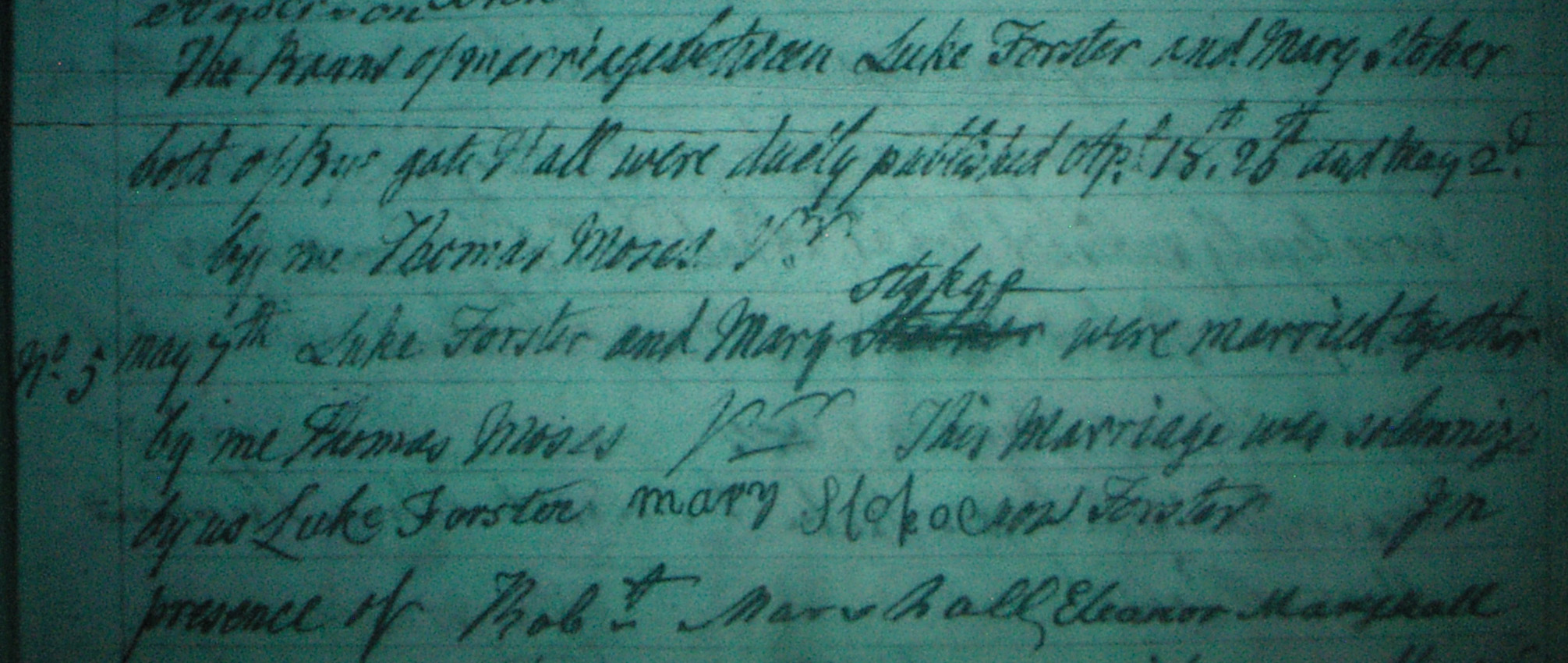
Alwinton Parish Register entry for banns and marriage of Luke Forster and Mary Stokoe both of Bygate Hall, 1773

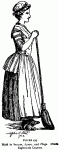
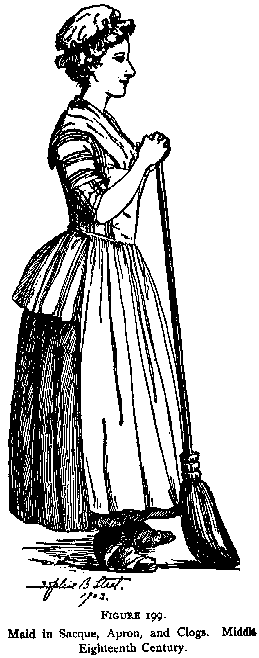
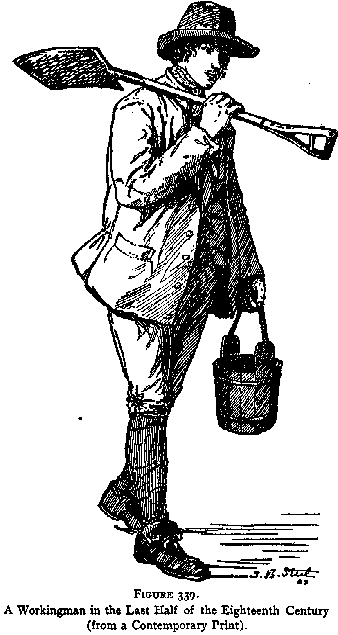
 As they were probably both servants, this is how Luke and Mary could well have dressed in their early adulthood:

Below is the much later 1806 death entry for Luke Forster, “labourer” who died while working at another farm, Sheep Banks. At this period the death entries are really informative and it runs across two pages of the register.
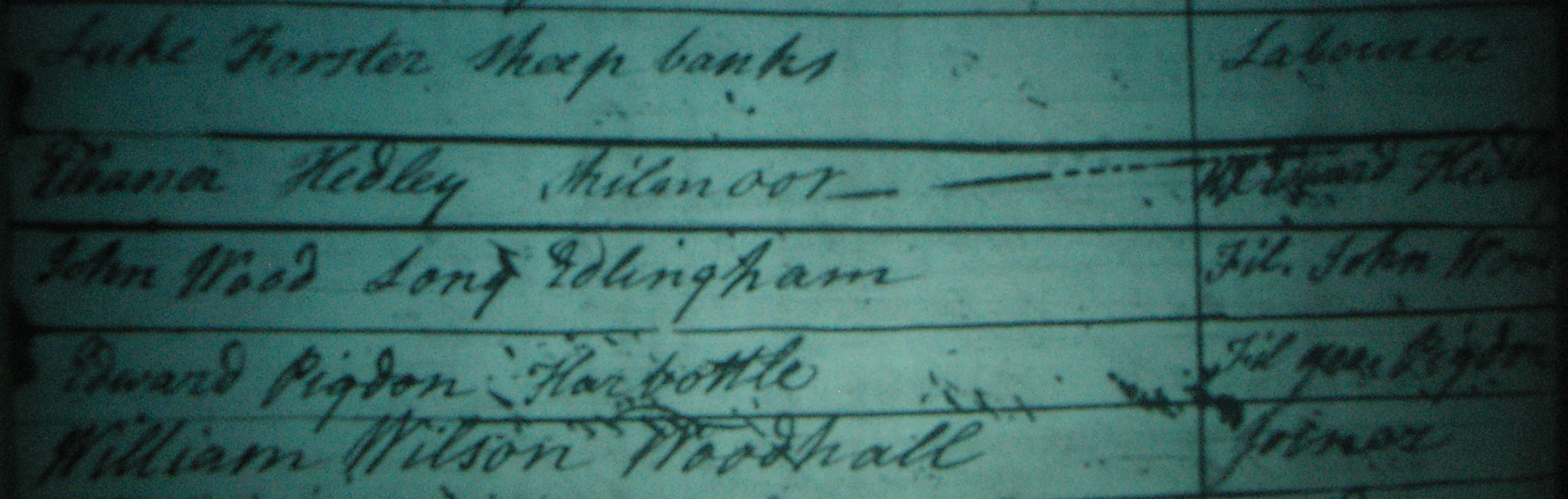
Alwinton Parish register page with entries for deaths of Luke Forster in 1806, and also his son-in-law William Wilson in 1807 – page 1 of 2
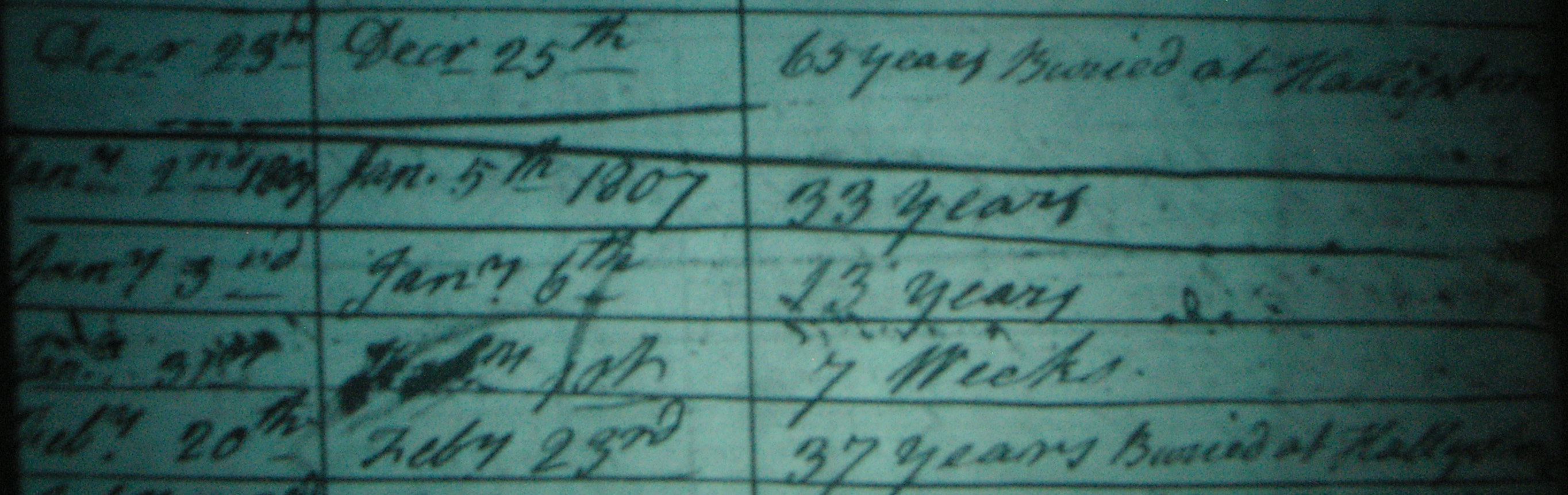
Alwinton parish register entries for deaths of Luke Forster 1806, and his son-in-law William Wilson in 1807 page 2 of 2

The birth of Luke and Mary’s son Mark Forster isn’t in the Alwinton register but that of  “The Scotch Congregation at Harbottle”, and we know he also had an older sister Elizabeth born 1778. I wonder if I can get the Harbottle register?  Here’s a sad footnote to the story of the Forsters at Bygate Hall:
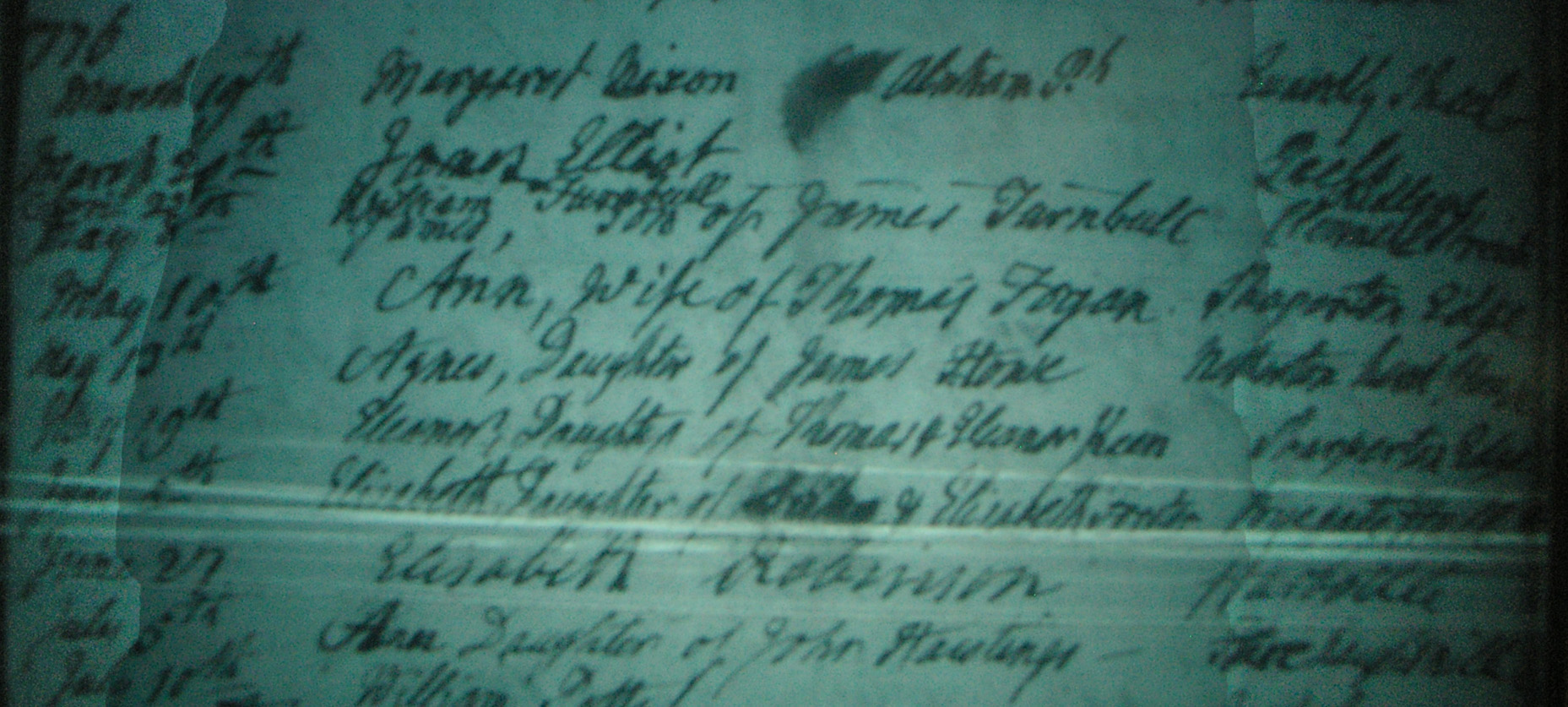
Death of baby Elizabeth Forster, daughter of Luke Forster at Bygate Hall 1776. Image from Alwinton parish register.

No baptism seems to be recorded for this child who died in 1776 so perhaps this first Elizabeth was stillborn. At this period, age at death was not being recorded in the register. The name of her mother must be an error. There will only have been one Luke Forster fathering children at Bygate Hall at the time and his wife’s name was Mary nee Stokoe.

At some stage between the birth of their son Mark in 1782 and Luke’s death in 1806  Luke and Mary left Bygate Hall and went to work elsewhere in the Parish. They may have been at Bygate Hall for as little as ten years. Son Mark went all the way up to Paxton in Scotland to be married to Margaret Wilson in 1801 though she was probably a neighbour. I wonder if that was to do with them being Presbyterians or to do with the marriage laws being different up there at the time? There were many other Alwinton entries relevant to our family,  especially to the Wilsons, who seem to have been in the district well before and well after the Forsters. After their marriage Mark and Margaret went to Rothbury to set up home and business, but that’s another story.

*Historical, Topographical, and Descriptive View of the County of Northumberland, and of those Parts of the County of Durham situated North of the River Tyne, with Berwick Upon Tweed, and brief notices of celebrated places on the Scottish Border. Mackenzie, E. 2nd Ed. 1825. Full-text online via google.

Parish registers on microfilm obtainable from LDS via genealogical societies.
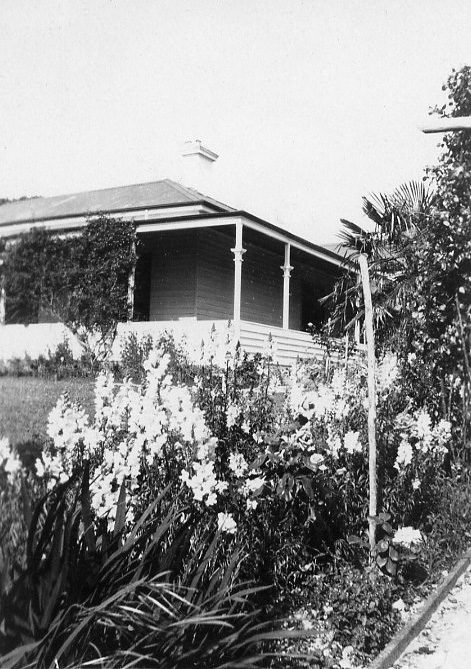
Carron Vale, Mooroolbark, about 20 miles from Melbourne near Mount Dandenong, was the country home of Archie, Connie, Harold and Peg Beatty from 1913 until late 1927. Hilda Forster lived with them for most of that time, along with Connie’s  lady companion and various staff.

Verandah with “boy’s rooms” at Carron Vale

It had a golf course and tennis court, and every weekend Stan and Gordon Forster among other friends and relations would congregate there. It sounded like Camelot at Mooroolbark from the stories we heard from Harold, Peg and more recently from their cousin Gwen Taylor (nee Littleton) who, along with her older brother and sister Geoff and Ruth was a frequent visitor.  As with other Camelots there was also the sense that everything was not quite as perfect as it seemed.

It was an exciting place for Harold and Peg to spend their childhood though.

I’m posting this because I’ve written up all of the Carron Vale period into “Our family story” (see chapters six to nine on the side menu), although I might add some more photos as I get around to it.  There are albums full of them!

Next I’ll deal with Harold’s jackarooing period and the 1930s. It might take a while though as there’s a lot of photos and documents to sort before a clear timeline emerges to hang all those stories of his on.

I’d love to hear from anyone with further information about the family at this period, especially corrections to, different versions etc. of this story.

The photographer noted “There’s something Heathcliffey about this place”

Byegate Hall, Northumberland. © Copyright ian shiell and licensed for reuse under this Creative Commons Licence.

Photo © Copyright ian shiell and licensed for reuse under this Creative Commons Licence.

 Have been trying to find out more about Bygate Hall, where Mark Forster was born 6 Dec 1782 according to this document.

Document 1 from Jack Forster research 1962

Jack Forster drew this map showing where the home was located when he visited there in about 1962.

Map showing Rothbury and track up to Bygate Hall from Alwinton

If you search Bygate Hall on the web you find “Bygate Hall Cottages” by the Coquet River, but these are not located in quite the right place according to Jack’s map. The link below shows both Bygate Hall Cottages where a stream called Croft Sike joins the R. Coquet, as well as the place which Jack indicated, which is midway between Bell Hill to the north and Long Hill to the south and well to the west of the Coquet River and called “Byegate Hall”. You might need to track to the south-west and zoom in as the map doesn’t seem to open at exactly the spot I intend it to.

http://www.streetmap.co.uk/grid/386500_610500_120

I think “Byegate Hall” is where Mark Forster was born. They were less pedantic about spelling back then. It’s certainly the place Jack Forster meant, and Jack led us to believe that it was the Forster’s ancestral home.

Here are more photos of Byegate Hall, now apparently abandoned if not derelict If you want to copy them be sure to credit the photographer.

http://commons.wikimedia.org/wiki/Category:Images_from_the_Geograph_British_Isles_project_needing_categories_in_grid_NT8508

Just to muddy the picture though, Google quickly finds  a reference from 26 June 1760 to “William Marshall, Byegate Hall, gentleman” and from 15 Aug 1810 when a John Marshall of Byegate Hall, farmer, died of consumption aged 24 and was buried at Burness, to the southwest of Bygate Hall. These two dates straddle the 1782 date of Mark Forster’s birth, so where do the Forsters fit in at Byegate or Bygate Hall?

Postscript: Have answered my own question after spending a few days reading the Allenton (Alwinton) Parish register. Many people lived at Bygate Hall – it was pretty much a small village in itself in the eighteenth century. The Forsters were definitely tenants if not employees! More in a later post.

This was one of those exciting discoveries that keep us family historians hooked. It happened a few weeks ago now, before I had a website, but I thought it deserved a post. We knew the name Paget mainly because Beatty boys kept getting it as a middle name through a family tradition based on it being an ancestral connection with some social pretensions, and we vaguely understood it to be the maiden name of Marcella, the wife of Jas. Beatty who brought his family to Australia in the late nineteenth century. Both the index records and Marcella’s death certificate named her parents as James Paget and Hannah Dempsey which pushed the family tree back another generation. A Google search then found those names connected in this record of a Paget estate called Kinnard (or Kinard) Lodge near Enniscrone, County Sligo.

http://www.landedestates.ie/LandedEstates/jsp/estate-show.jsp?id=218

Archie Beatty’s descendants all knew that he had been born at Enniscrone shortly before his family left for Australia.  A bit of collaboration discovered James and Marcella’s marriage certificate where the occupation of her father, James Paget is given as “Gentleman” whereas his father (also James Beatty) is a “Farmer”.

Another connection was made while scouting through digitised Argus pages in TROVE (surely the cleverest thing that the National Library of Australia has ever done!). Look what the Beattys call their house in Caroline St., South Yarra at the time of Charles Gordon’s birth.

From The Argus, Melbourne, Weds 25 Feb 1885

But the real breakthrough was discovering this announcement in TROVE:

Paget-Beggs marriage from the Argus Thurs 19 Nov 1885

What the heck is someone claiming to be a son of “James Paget of Kinard Lodge, Ireland” doing in Violet Town, Victoria? Our Pagets are all supposed to be in Ireland being gentry!! I spent an afternoon checking all the Paget births, marriages and deaths in the indexes forVictoria. A high proportion of them took place around Voilet Town and Baddaginnie. It became clear that two sons of James Paget had come from Ireland to Victoria, married two Beggs sisters and had many children, later losing most of their sons in the First World War. In fact at one stage, half of the Pagets in Victoria were certainly relations of ours.

The most interesting entry of all was for a “Hanorah” Paget who died at Baddaginnie aged 75 in 1897.  Surely it couldn’t be Hannah herself? Another $30 for the death certificate and YES! She is our Hannah, wife of James Paget, born in Ireland having arrived in Victoria the same year as James and Marcella Beatty, with her children listed with ages given including Marcella, James, and Charles. Yay for informative Victorian death certificates. If she hadn’t come to Australia we’d have been lucky to find a death certificate for her at all, and even so it would have had far less information.

And yes, the name of her father, John Dempsey, pushes the family tree back another generation. It’s a shame that Charles Paget who was the informant didn’t know his grandmother’s name.  Oh well, the hunt continues.

Added 9 May 2012: My most up-to-date information on the Pagets is now part of “The story” – see the link to it in the right hand column.

I’m very proud to be related to this ever so elegant lady, but who is she? The photo is by “The Burlington Studios, 294 Bourke St., Melbourne”. They set up business in 1903, the hat is the 1905-6 fashion – I think. Mary Jane McLean would have been 58 by then, although they employed people to “touch up” photos. Maybe it’s Connie? I’ve put up every photo I have of both Mary Jane and Connie in the photo gallery so you can compare them. Is it someone else??

Update: OK, Thanks for comments. I think you’re right and it’s Connie. Further update Jan 2013: I now think this photo is about 1908, and am quite sure it must be Constance Forster.

Mary Jane? Connie? Someone else?

I think I’ve worked out a way to get the images displaying better in the image gallery, so have added some more Forster photos and have added the next part of the story, “The Forsters of Rothbury“, which you should see on the side menu. It is all a permanent work in progress of course. Let me know if any of it is wrong.

I found this photo, which HAP, when asked, had described as “various Forster brothers and sisters”:

About 1902?

It’s definitely Harold second from the left, Connie in the middle, Hilda seated left, and I think it looks like Ruby seated right. Archie isn’t there, so could it be either Arthur or Willie with his arm around Connie?  I think it might be Annie on the far left too. It looks within a year or two of the wedding photo? Probably earlier as Harold is in this one. Any theories?

I had a great weekend with descendants of Charles Gordon Beatty who I was thrilled to discover a couple of months ago. Wonderful food was eaten and much fun was had. We examined old documents from the “Jas. Beatty” box,  speculated about the identity of people in old photos and took a few new ones which we plan to label more carefully so that future generations have a better idea who we are 🙂

Many new anecdotes can now be added to the Beatty family story so I couldn’t resist immediately rewriting the 19th century part of it. Find it on the side menu it’s called “The Beattys out of Ireland” under “Our family story”

https://taggerty.wordpress.com/the-story/the-beattys-out-of-ireland/

One wonderful new (to me) anecdote gives a whole new meaning to this photo of young Archie (centre right) and friends

The Beatty boys of South Yarra used to get into altercations with boys from Richmond at the boundary of their territories, the Punt Road bridge across the Yarra. The eldest, Jim was very big and used to sit on the most troublesome of the opponents while his 3 younger brothers and friends dealt with the rest. Jim certainly isn’t in this photo, and we don’t think Charles Gordon is either, but if this lot of likely lads were defending the South Yarra end you’d think twice before crossing the bridge! I wonder what the Forsters of Toorak would have thought?

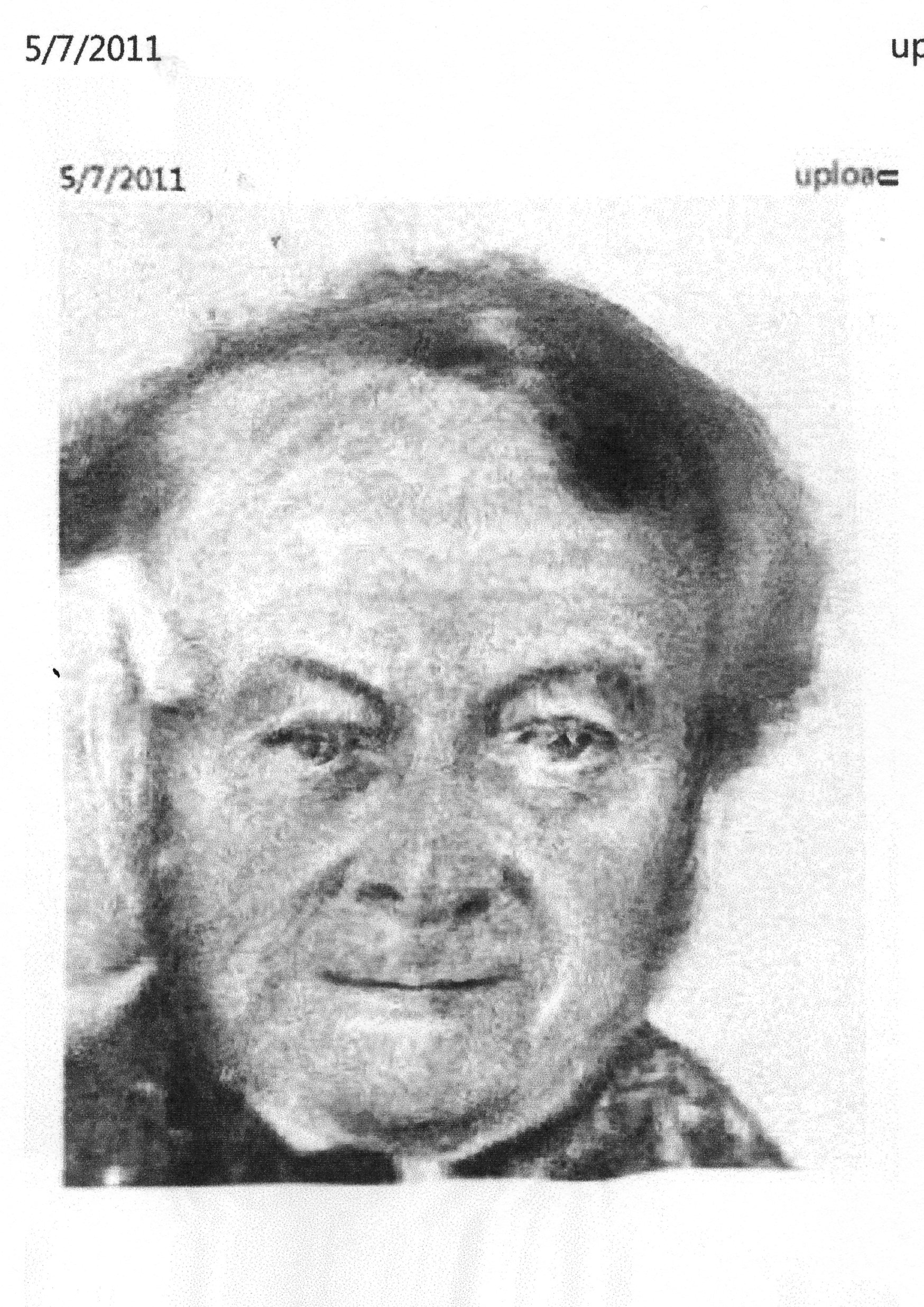
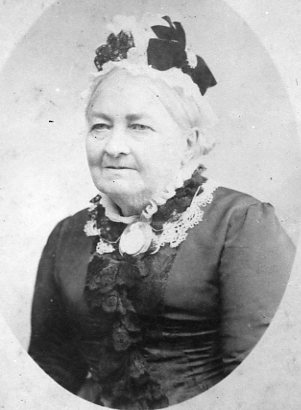
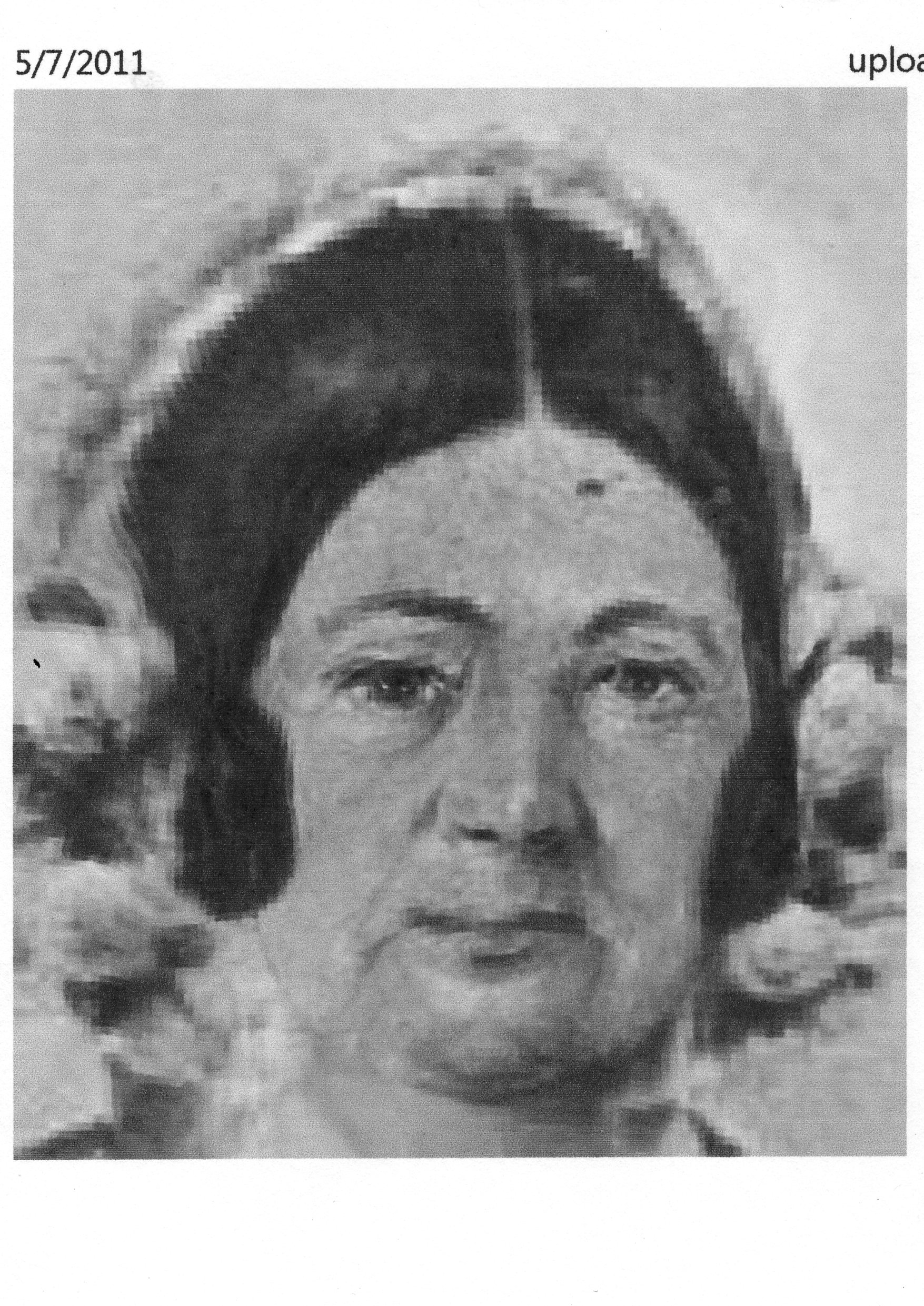
What do you think of this? Bruce Forster has run an “ageing processor” over our mysterious portraits from the post before last. You need to ignore the hair though. I think it has to be them. Apologies for not having worked out how to organise images on the page yet.  I may have to study (shudder) HTML.

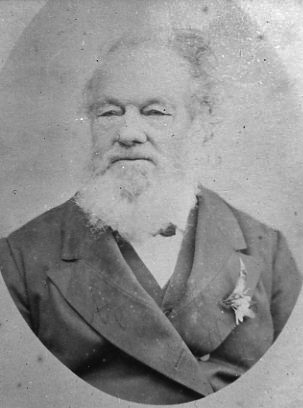
The real Luke Forster in old age

Possible portrait of Luke Forster after ageing processor

The real Anne Forster nee Blackett in old age

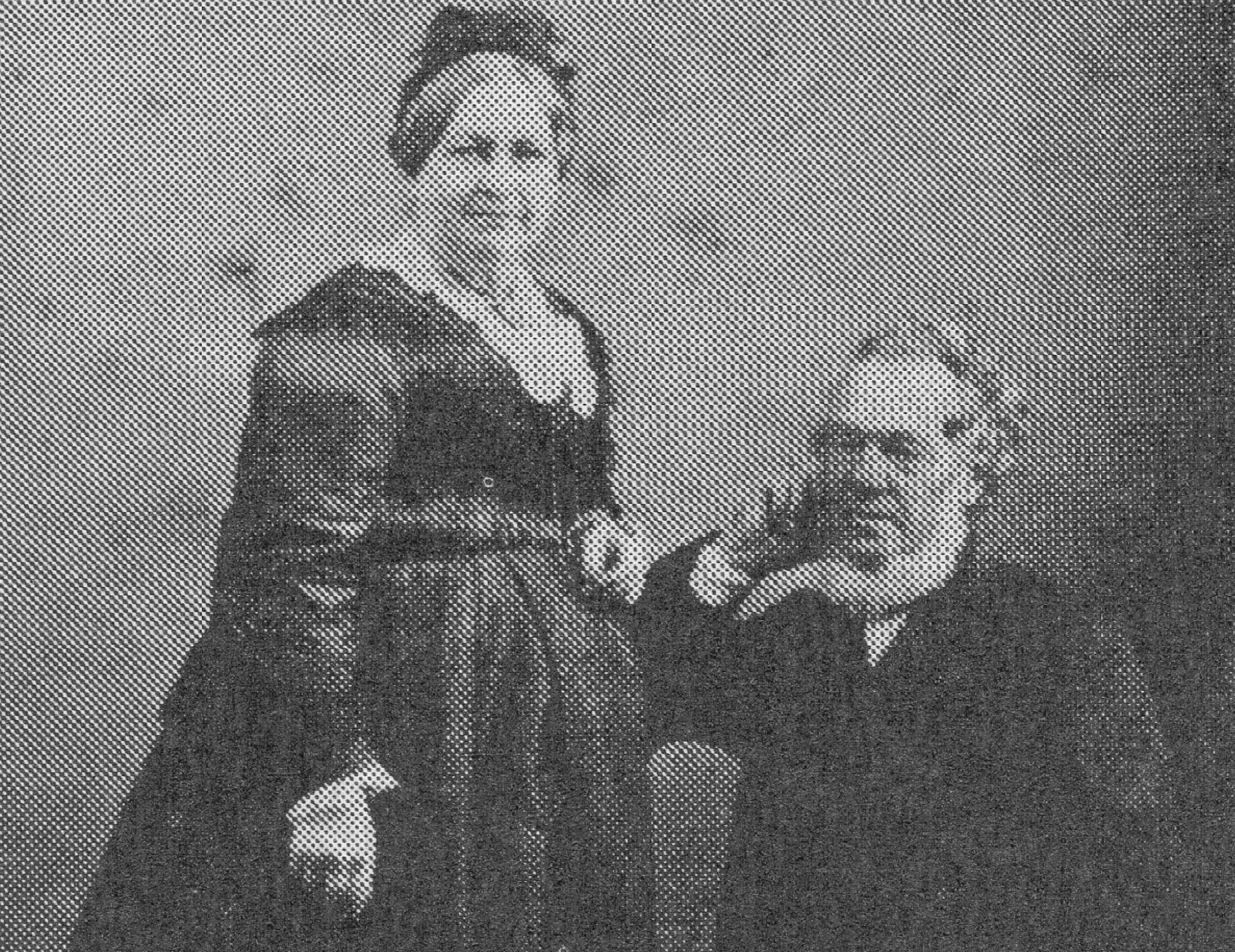
The real Luke and Anne Forster

Possible portrait of Anne Blackett after ageing processor

The first “family historian” I met was John Arthur Blackett “Jack” Forster who visited my parents in the early 1960’s to look at our family documents and returned to regale us with details of his trip to Northumberland where he spent time cross-checking our documents in parish registers at Rothbury and Alwinton. From him we first learned about the Forster ancestral home Bygate Hall, which he also visited.  He was then a retired metallurgist. My father’s cousin, he was the eldest son of Arthur Edward Blackett Forster who was the eldest son of William Mark Forster.  You can find him in my family tree (the link to it is on the rhs of home page).  I’ve copied the major documents from his research for anyone who is interested. See “Early Forster documents” under the “Image gallery” tab above. His research was methodical and accurate as far as I can tell, except for the label on the portrait discussed in the last post.

I don’t have an adult photo of Jack, but this caricature from an unspecified newspaper in his Shire Councillor days is so very much as I remember him.

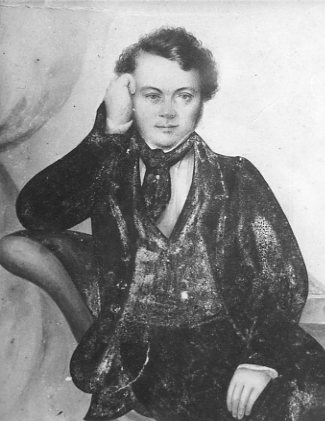
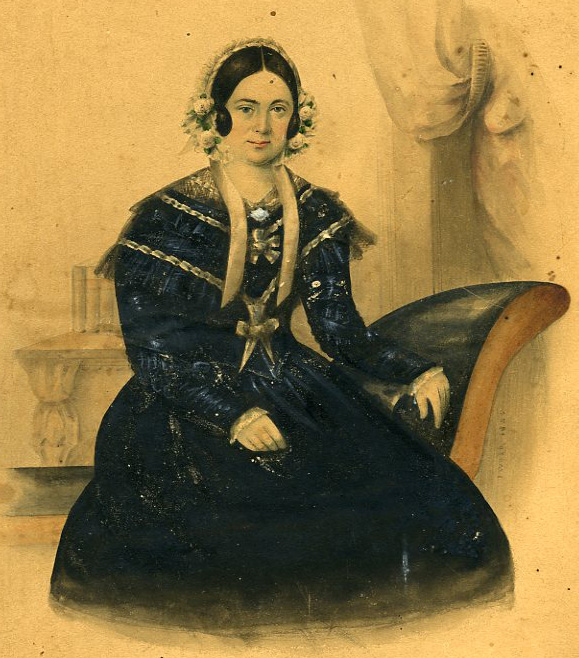
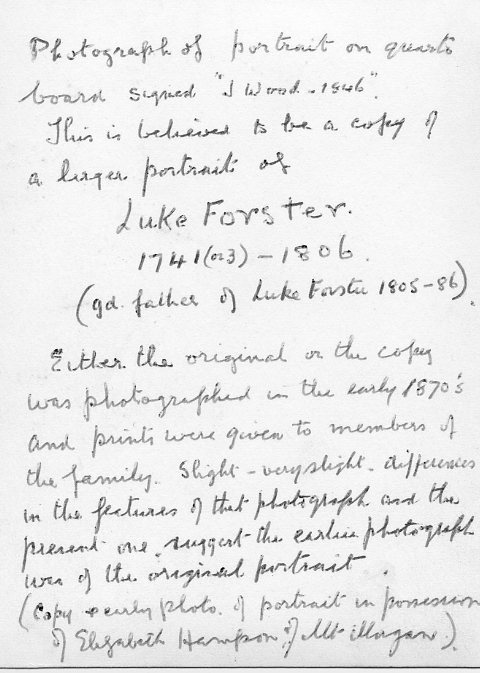
The painting of the woman came with our Forster family photos and documents. I don’t think John “Jack” Forster can have seen it when he visited in the 1960s, or he would certainly have made the connection with this “painting of a man signed ‘J Wood 1846’ …believed to be a copy of a larger portrait of Luke Forster 1741-1806”  See Jack’s note below, written on the back of the photo.

Under the arm of the sofa in the portrait of the woman (written vertically)  is  “J Wood 1846”. She even appears to be sitting at the other end of the same sofa as the man, whose portrait appears to be a water colour sketch in exactly the same style. I assumed that they must be husband and wife, and that’s why I assumed she must be Mary Stokoe. She can’t be, because Mary Stokoe died in 1825 aged 82, and the (youngish) woman in the portrait is dressed in what would have been the height of fashion in – well, 1846.

Also I don’t think the man can be the Luke Forster who died in 1806 at 65. At age 30 in the 1770s wouldn’t he have been wearing a wig? I think Jack must have been misinformed by “Elizabeth Hampson of Mt. Morgan” (nee Gowdie) who would have been in her 80s when he spoke to her, and who at that time owned the original of the painting of the man. Both the man and the woman appear to be aged about in their 30s, as the younger Luke Forster and his wife Anne Blackett would have been in 1846, about 6 years before they left Northumberland for Australia. 

Can anyone help identify them? The only photos I have of Luke and Anne are in their old age.