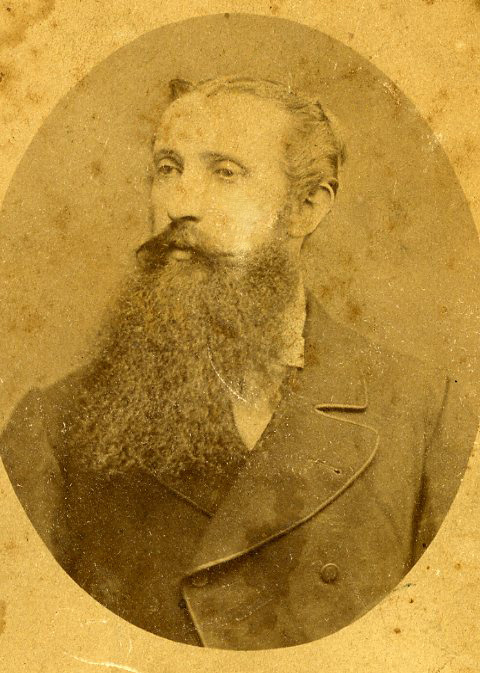
Family research can be a lot of fun, but one hazard is discovering things you would have preferred not to know about – and certainly things that your ancestors would not have wanted you to know about. When writing up our Beatty family story some years ago I discovered something that felt too shocking and embarassing to publish about – especially since my great grandfather James Beatty had already suffered a reputational knock by having his drapery business in Ballina go bankrupt.
I found this church baptism record (on the RootsIreland database) for a John Beaty born in Ballina 22 April 1869:
Name: John Beaty
Date of Birth: 22-Apr-1869
Date of Baptism: 02-May-1869
Address: Knox St/Ardnaree
Parish/District: Kilmoremoy/Ballina
County: Co. Mayo
Gender: Male
Denomination: Roman Catholic
Father: Unknown Beaty
Mother: Eleanor Loftus
Sponsor 1/Informant 1: John Loftus
Sponsor 2/Informant 2: Cath McLaughlin
Notes: The father is a draper (a protestant) living in Knox St. Ballina
You can imagine the father of this unmarried girl, and also the outraged parish priest, taking a vindictive pleasure in adding the incriminating note which, more than 150 years later, would shock a great grand-daughter researching her family story!

There were very few Beattys in Ballina at the time and James and his elder brother Archibald had come from Fermanagh and were only in Ballina for a few years from about 1860 after their mother died and their father remarried, until 1878 when James emigrated and 1874 when Archibald moved on. There was only one Beatty who had a drapery business in Knox Street in 1869.

Baby John was born about four years before James Beatty married into the minor gentry and about eight years before he and his family emigrated to Melbourne, Victoria where they lived in anglican respectability and were friends of the bishop. I wonder how my distant cousin John fared? I can find nothing else about him in the records.

I guess we have all made mistakes and have things we'd prefer that nobody knew about.

What do family historians (and family members!) think? Should we tell the family story as we find it or should we cast a rosy glow over the past by ignoring the failures and mistakes of our ancestors that we uncover? I know at least one member of my own family who prefers to believe all the debunked family myths to the carefully researched family story that I've uncovered 🙂


 taggerty
Sue – Truth is always best. Some members of my wife’s family were upset when I found that one of the early female ancestors arrived in Hobart from Britain as a convict at 18 or 19.
LikeLike
Thanks Anonymous, Yes, time was when it was a disgrace to have convict ancestors, but when my mother was researching her family history in the 1980s she was very disappointed that none of her four convict ancestors had come on the first fleet and she couldn’t join the exclusive club!
LikeLike
I am so glad you have embraced the past and written this part of your story. How old would James have been at this time? Who were his parents in County Fermanagh?
I have DNA matches to Beatty’s of Fermanagh. What happened to John Beatty the baby born out of wedlock.
All these events of the past only add to the rich tapestry of our past. They show us the frailties of our ancestors. We should celebrate the fact that we are able to tell their stories. Sue
LikeLiked by 1 person
Thanks Sue for your encouraging message.
James would have been 27 at the time of the birth. His father was James Beatty (1797-1873) of Aghavoory, Co. Fermanagh. I can’t find the name of his mother, but she was his first wife, predating his marriage to Sarah Cooke.
I don’t know what happened to John Beatty. Someone of that name died in Ballina in 1905 but can’t be the same person as 30 years older.
LikeLike
Generally I think the truth is best … surely we can be tolerant about people’s whose lives and circumstances we know little about? The real challenge for me would be if I found someone cruel or violent in my family. But still – like David Marr has done I believe – truth is best.
I have three convicts at least in my family. Dear old grandpa didn’t like it but for the rest it is an interesting part of our history.
LikeLiked by 1 person
This is a fairly familiar story in our wider family – not the story of James Beatty, but the story of unacknowledged or semi-acknowledged children born to men in our family in the 19th and 20th centuries. Some of these couples had long-term relationships, but, in some cases, their children grew up in poverty and did not inherit the fairly substantial houses belonging to their fathers, even when their fathers remained unmarried and had no other known children. The pattern repeats – a Church of Ireland man and a Roman Catholic woman.
Two factors may be in play. One was the enormous social barrier preventing Intermarriage between Catholics and Protestants in Ireland, even up to recent years. The other was that, until 1870, there were legal barriers to these marriages. Some couples had no option to marry if a woman became pregnant, and the woman faced social censure alone.
LikeLike